Parents today are preparing their children for a future that looks very different from the one they grew up in. Good grades are still important, but employers, universities, and society increasingly value skills like communication, creativity, problem-solving, and adaptability.
At Mind Oriented, we believe children should grow into confident learners who are ready for the future—not just the next exam. Here are ten essential skills every child should develop in 2026 and beyond.
1. Confident Communication
Children who can express their thoughts clearly often perform better in classrooms, competitions, and social situations. Confidence in speaking helps them participate in discussions, interviews, presentations, and leadership opportunities.
One of the best ways to build this skill is through regular public speaking practice, storytelling, debates, and interactive conversations.
2. Critical Thinking
The future belongs to children who can analyze problems and think independently.
Instead of memorizing answers, children should learn to:
- Ask meaningful questions
- Evaluate different solutions
- Think logically
- Make informed decisions
Critical thinking is useful in every subject, from mathematics to science and everyday life.
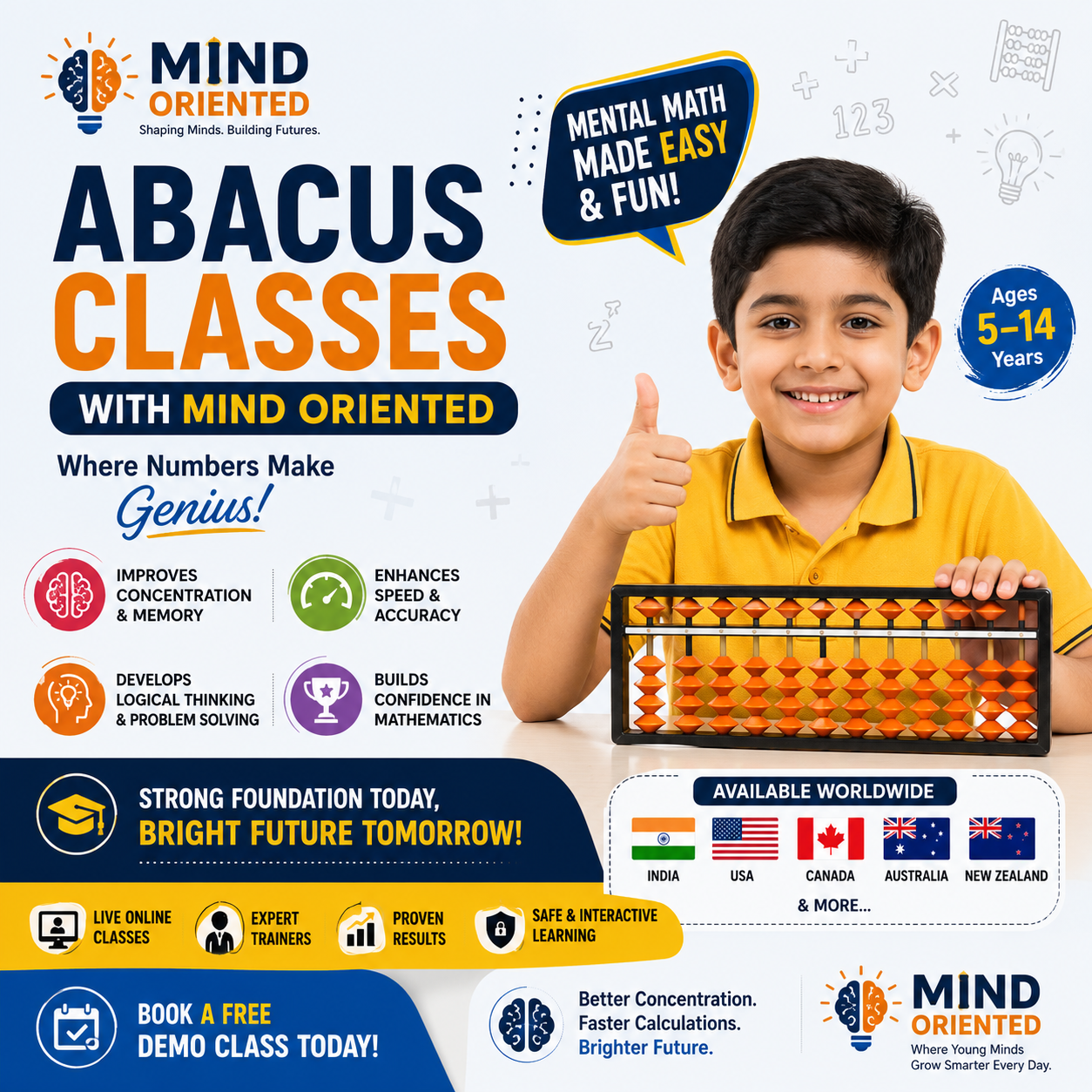
3. Strong Mathematical Thinking
Mathematics is much more than numbers. It develops logical reasoning, pattern recognition, and structured thinking.
When children understand mathematical concepts instead of memorizing formulas, they become better problem-solvers and more confident learners.
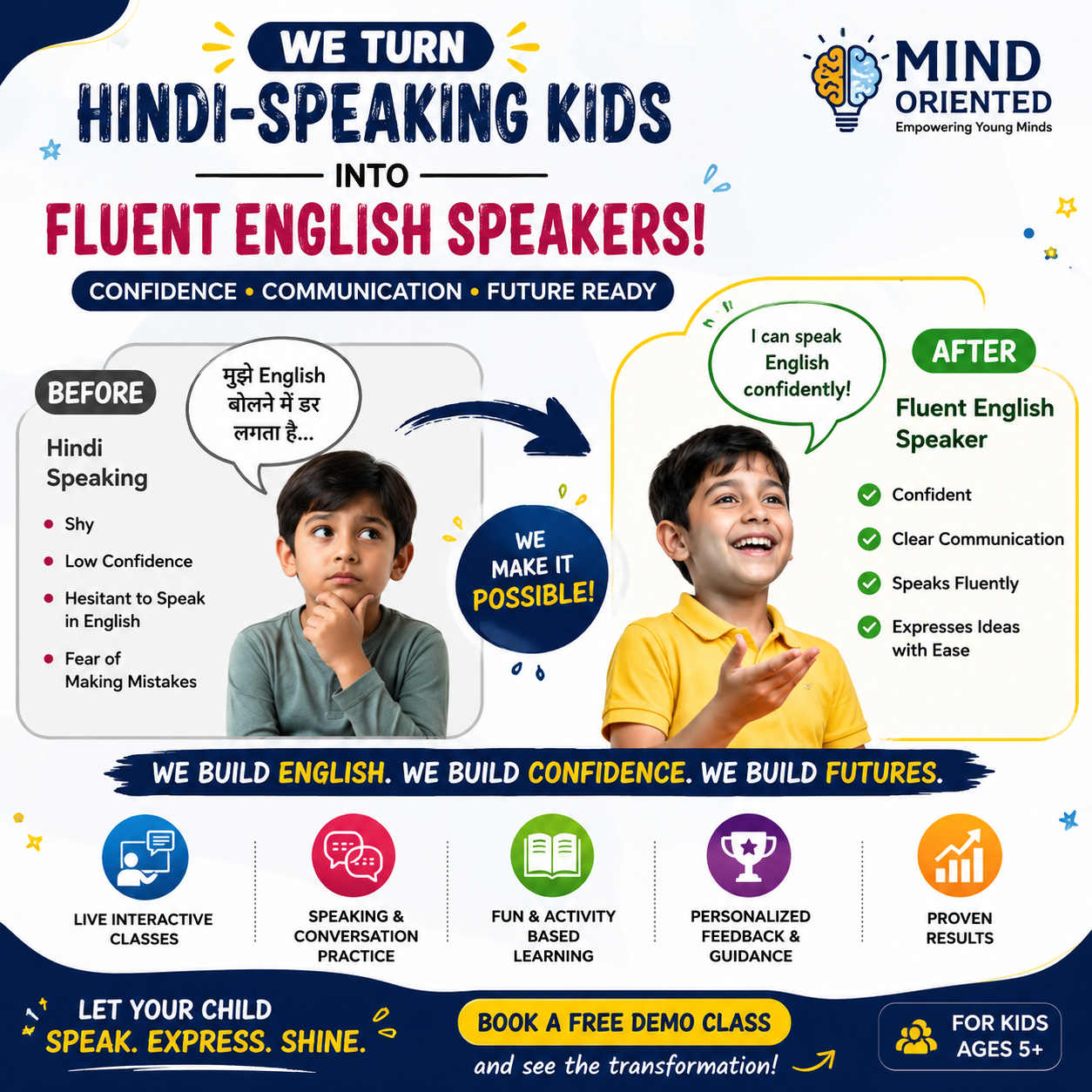
4. English Communication Skills
English remains one of the most important global languages for education and career opportunities.
Children who practice speaking English regularly improve:
- Vocabulary
- Pronunciation
- Grammar
- Listening skills
- Conversation confidence
Learning through interaction is far more effective than memorizing grammar rules alone.
5. Reading and Phonics
Reading is the foundation of all learning.
Children with strong reading skills understand concepts faster and perform better across subjects.
Phonics helps children:
- Decode words correctly
- Read fluently
- Improve spelling
- Strengthen comprehension
- Develop a lifelong reading habit
6. Creativity
Creativity is no longer limited to art and music. It is essential for innovation, entrepreneurship, and problem-solving.
Activities like creative writing, storytelling, project-based learning, and brainstorming encourage children to think beyond textbook answers.
7. Financial Awareness
Understanding money is a life skill that many children never learn in school.
Basic financial literacy teaches children:
- Saving habits
- Budgeting
- Responsible spending
- Goal setting
- Smart financial decisions
Learning these concepts early helps children become financially responsible adults.
8. Concentration and Memory
In a world filled with digital distractions, focus has become a superpower.
Techniques such as mental math, Abacus, memory exercises, and structured learning activities help improve:
- Attention span
- Memory retention
- Processing speed
- Academic performance
Children who can concentrate effectively often learn faster and feel less overwhelmed.
9. Collaboration and Leadership
Success in the modern world often depends on working well with others.
Group discussions, presentations, collaborative projects, and team activities teach children to:
- Listen actively
- Respect different opinions
- Solve conflicts
- Take initiative
- Lead with confidence
These experiences prepare them for future academic and professional environments.
10. Lifelong Learning
Technology and industries evolve rapidly. The ability to keep learning is one of the most valuable skills a child can have.
Children who are curious, adaptable, and open to learning new ideas are better prepared for future challenges and opportunities.
Encouraging curiosity today creates independent learners for tomorrow.
How Mind Oriented Helps Build These Skills
At Mind Oriented, we focus on developing the whole child—not just academic performance.
Our live online programs include:
- Public Speaking
- Spoken English
- Mathematics
- Abacus
- Phonics
- Creative Writing
- Financial Literacy
- Olympiad Preparation
Every class is designed to be interactive, engaging, and practical, helping children apply what they learn in real-life situations.
Our experienced teachers create a supportive environment where every child is encouraged to ask questions, think independently, and grow with confidence.
Why Parents Choose Mind Oriented
Families across India, the USA, Canada, and the Middle East choose Mind Oriented because we provide:
- Live interactive classes
- Experienced and caring educators
- Small batch sizes for better attention
- Flexible schedules
- Personalized learning support
- Skill-based education alongside academics
Our goal is to help children become confident communicators, logical thinkers, and lifelong learners.
ConclusionBook a Demo
The future will reward children who can communicate effectively, solve problems creatively, think critically, and adapt to change.
Academic success is important, but it is only one part of a child’s development. By nurturing essential life skills alongside education, parents can help their children thrive in school and beyond.
At Mind Oriented, we are committed to preparing children not just for exams—but for life.
Frequently Asked Questions (FAQs)
What age group are Mind Oriented courses designed for?
Our programs are suitable for children from early learners to teenagers, with age-appropriate curriculum and teaching methods.
Are the classes live or recorded?
All sessions are conducted live, allowing students to interact with teachers, ask questions, and participate in activities.
Can international students join?
Yes. We teach students from India, the USA, Canada, and the Middle East through flexible online schedules.
Do you offer individual classes?
Yes. Parents can choose between one-on-one sessions and small group classes based on their child’s learning needs.
Which course should my child start with?
The best course depends on your child’s goals. Whether it’s improving communication, mathematics, reading, or confidence, our team can recommend a suitable learning path.
Keywords
- Essential skills for kids
- Future skills for children
- Communication skills for kids
- Critical thinking for children
- Online learning for kids
- Public speaking classes
- Spoken English for children
- Maths classes online
- Phonics classes
- Abacus classes
- Financial literacy for kids
- Mind Oriented
- Skill development for children
- Best online classes for kids
- Future-ready education for children