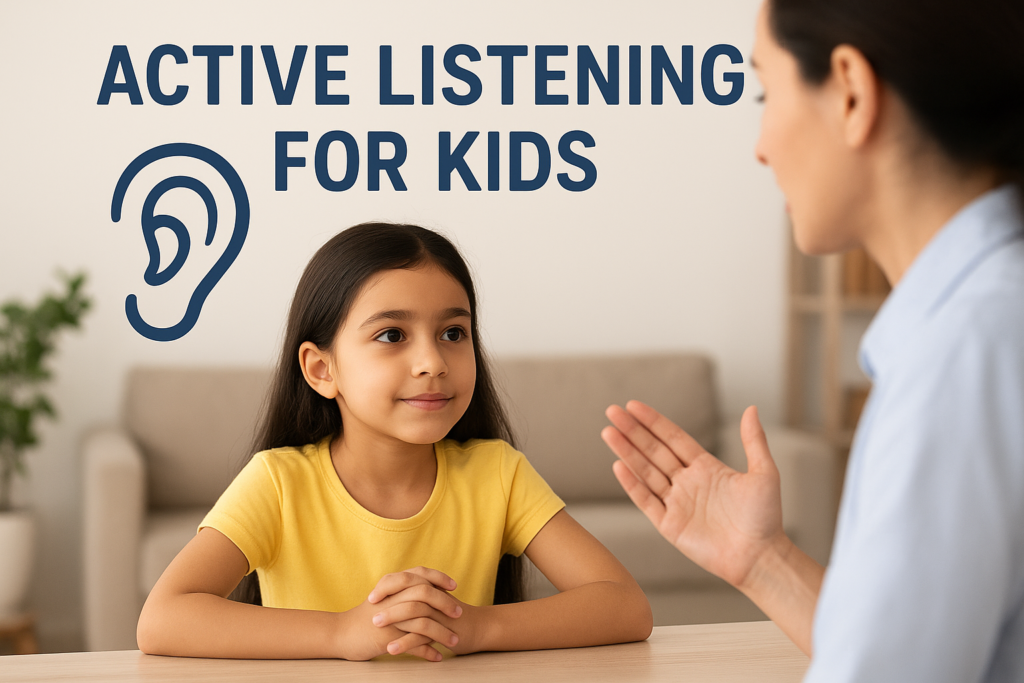
Active Listening for Kids: The Secret to Better Communication and Learning
In today’s fast-paced digital world, children are surrounded by constant noise and distractions—from buzzing gadgets to endless notifications. Amid this, one essential life skill often gets overlooked: active listening. Whether it’s understanding a classroom lesson, following instructions at home, or engaging in meaningful conversations with peers, active listening lays the foundation for effective communication. In fact, many parents find that enrolling their children in a Public speaking class for kids not only boosts their confidence but also naturally strengthens their listening skills.
What Is Active Listening?
Active listening is more than just hearing words—it’s about fully engaging with the speaker, processing the information, and responding thoughtfully. For kids, this means:
- Paying attention to the speaker without interrupting.
- Making eye contact and showing interest.
- Asking relevant questions to clarify understanding.
- Responding in a way that shows they truly understood the message.
When children practice active listening, they develop empathy, improve memory retention, and become better problem solvers.
Why Active Listening Matters for Kids
- Improved Academic Performance
A child who listens actively in class is more likely to grasp complex concepts, remember important details, and perform better in exams. Teachers often notice that children with good listening skills are also more disciplined and focused learners.
- Better Social Relationships
Listening with full attention makes children more empathetic and compassionate toward their friends. This skill reduces misunderstandings, helps resolve conflicts faster, and fosters stronger friendships.
- Boosted Self-Confidence
When children listen carefully and respond thoughtfully, they feel more confident expressing their opinions. This confidence can positively influence their participation in group activities, presentations, and public speaking.
How Parents Can Teach Active Listening
- Model Good Listening Habits
Children learn by example. When they see parents listening attentively—maintaining eye contact, nodding, and responding appropriately—they’re more likely to mirror the same behavior. - Practice the “Repeat Back” Technique
Encourage kids to repeat back what they’ve just heard in their own words. This helps confirm their understanding and keeps them engaged. - Limit Distractions
Designate certain “no screen” times during conversations to help kids focus solely on the person speaking. - Ask Open-Ended Questions
Instead of questions that can be answered with “yes” or “no,” ask ones that encourage kids to think and elaborate.
The Link Between Active Listening and Communication Skills
Strong listening skills go hand in hand with effective communication. For example, when children practice Grammar and punctuation practice for kids, they learn how to structure their sentences correctly, which in turn helps them respond more clearly during conversations. This combination of active listening and accurate expression enhances both verbal and written communication.
Fun Activities to Encourage Active Listening
- Story Retelling
Read a short story to your child and ask them to retell it in their own words. This strengthens comprehension and attention to detail. - Listening Games
Games like “Simon Says” or “Telephone” make listening fun while improving focus and memory. - Role-Play Conversations
Create scenarios where your child plays the role of a listener and then switches to being the speaker. This helps them understand both sides of communication. - Music and Lyrics Practice
Listening to songs and understanding their lyrics is a playful way to enhance listening and comprehension.
The Long-Term Benefits of Active Listening
Developing active listening skills early in life prepares children for success in academics, careers, and personal relationships. It teaches them patience, empathy, and the ability to truly connect with others. By making active listening a part of everyday life—through family conversations, school activities, or enrichment programs—parents can help their children grow into thoughtful, effective communicators.
Final Thoughts
Active listening is not just a skill; it’s a habit that shapes a child’s personal and academic journey. While speaking clearly is important, understanding what others are saying is equally crucial. Parents who nurture this skill at home will see their children thrive not only in school but in life as well. And when paired with programs that enhance speaking abilities, like a public speaking class, the results can be truly transformative.